

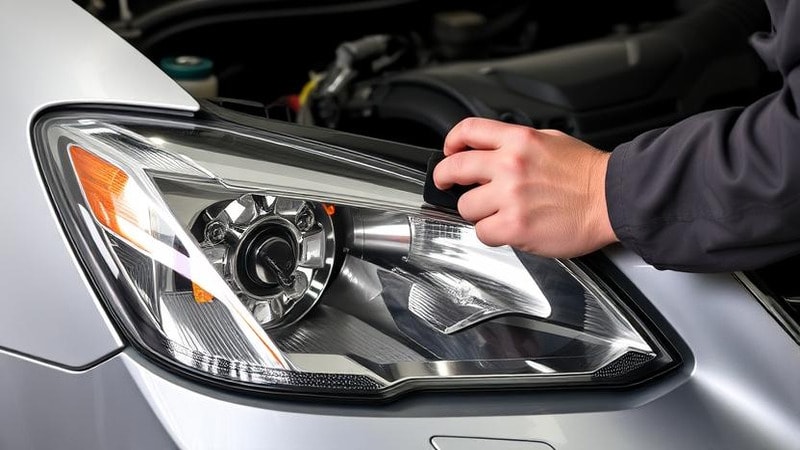
Vehicle safety relies heavily on components that driver’s often take for granted. While oil changes, brake inspections, and tire rotations routinely top the list of preventative maintenance, headlight care frequently falls to the background. However, your headlights are among the most crucial active safety features on any automobile. They do not simply illuminate the road ahead; they allow other drivers to see you, signal your presence in poor weather, and provide the necessary reaction time when hazards appear after dark.
Neglecting headlight care severely compromises night visibility, increases driver fatigue, and creates serious hazards for oncoming traffic. Understanding why regular headlight maintenance and alignment matter, along with how to maintain these components, is essential for every vehicle owner.
The Hidden Risks of Headlight Degradation
Modern headlight lenses are made from durable polycarbonate plastic. Unlike older glass lenses, polycarbonate is lightweight and resistant to impacts from gravel and debris. However, it suffers from a significant flaw: exposure to ultraviolet (UV) radiation from sunlight, along with atmospheric pollution, road salt, and harsh weather, causes the clear protective coating to break down over time.
The Problem of Oxidation and Fading
This breakdown leads to oxidation, which manifests as a cloudy, yellowed, or hazy layer on the lens surface. Oxidation does not merely alter the vehicle appearance; it drastically reduces light output. A heavily oxidized lens can block up to 80 percent of the light produced by the internal bulb. Drivers operating vehicles with oxidized lenses often experience:
- Reduced viewing distance, limiting reaction time to road debris, wildlife, or pedestrians.
- Severe light diffusion, causing light rays to scatter randomly rather than focusing on the road ahead.
- Increased glare for oncoming drivers due to unstructured beam dispersion.
- Strained vision and accelerated eye fatigue during night driving.
Understanding Headlight Alignment: Why Direction Matters
Proper headlight function involves more than clean lenses and functional bulbs; the direction in which the light beam is aimed is equally critical. Headlight alignment refers to the precise physical orientation of the headlight assembly relative to the vehicle frame and the road surface.
Over time, daily driving conditions alter headlight alignment. Driving over potholes, striking curbs, carrying heavy loads in the trunk, and experiencing normal suspension wear all shift the position of the headlight assembly or the height of the vehicle body.
Upward Misalignment
When headlights are aimed too high, the central portion of the beam shines directly into the eyes of drivers in oncoming vehicles or into the rear-view mirror of vehicles ahead. This creates severe, blinding glare, momentary vision loss, and unsafe driving conditions for surrounding traffic. Furthermore, light directed upward fails to illuminate the asphalt directly in front of your vehicle.
Downward Misalignment
When headlights point too far down, the beam hits the ground just a few feet in front of the bumper. While this provides bright illumination immediately ahead of the hood, it leaves the road beyond short distances completely dark. At highway speeds, a driver with downward-misaligned headlights will overdrive their lights, meaning their stopping distance exceeds the illuminated area visible to them.
Lateral Misalignment
Headlights aimed too far to the left blind oncoming traffic, whereas headlights aimed too far to the right fail to illuminate the primary lane, casting light instead into roadside trees or adjacent properties. Proper right-side coverage is necessary to spot pedestrians, road signs, and entering wildlife, but excessive offset leaves the primary travel path dangerously dim.
Comprehensive Maintenance Steps for Maximum Visibility
Maintaining optimal headlight performance requires a routine schedule that combines cleaning, lens restoration, bulb replacement, and professional checks.
Routine Cleaning and Inspection
Wash headlight lenses regularly using automotive shampoo and a soft microfiber towel. Road grime, dried bug residue, and winter salt build up quickly, reducing light clarity long before physical oxidation sets in. Perform a visual inspection every month by turning on your lights while parked facing a wall to verify that both sides emit equal brightness and color.
Lens Restoration
When lenses begin to turn yellow or cloudy, standard car washes will not resolve the issue. Lens restoration kits or professional refinishing services use progressive sanding steps to remove the damaged top layer of oxidized plastic. Once sanded smooth, the plastic is polished back to optical clarity and sealed with a new UV-resistant clear coat. Omitting the UV sealant will cause the lens to re-oxidize rapidly within a few months.
Timely Bulb Replacement
Headlight bulbs wear down over time. Traditional halogen bulbs experience filament degradation, gradually losing light output before failing entirely. High-Intensity Discharge (HID) and Light Emitting Diode (LED) systems can also lose intensity or shift in color temperature as they age.
Key practices for bulb maintenance include:
- Replacing bulbs in pairs: If one bulb fails, the opposite bulb has accumulated the same operational hours and will likely fail soon. Replacing both ensures balanced illumination and uniform light color.
- Avoiding direct hand contact: Never touch the glass portion of a halogen bulb with bare fingers. The oils from human skin create hot spots on the glass surface when the bulb heats up, causing premature failure.
When to Seek Professional Alignment Services
While cleaning and basic bulb changes are easily managed at home, precise headlight alignment requires specialized equipment. Modern vehicles feature complex optical systems, self-leveling suspension adjustments, and adaptive lighting features that react to steering input.
Professional automotive service centers utilize optical alignment machines and laser targets to measure beam cut-off lines down to fractions of a degree. You should request a professional alignment check under the following circumstances:
- Immediately following any front-end collision or fender bender.
- After replacing the headlight assemblies or major suspension components.
- After changing the vehicle ride height via lowering springs, lift kits, or modified tire sizes.
- If oncoming drivers routinely flash their high beams at you when your low beams are active.
- If you notice a distinct drop in night visibility despite having clean lenses and working bulbs.
Frequently Asked Questions
How often should headlight alignment be checked?
It is recommended to have your headlight alignment checked once a year or every 12,000 to 15,000 miles. Additionally, alignment should be inspected whenever you replace front-end suspension components or experience a front-end impact.
Can I align my vehicle headlights at home?
While basic manual alignment can be attempted at home using a flat wall, tape measure, and adjustment screws, it is difficult to achieve precise factory accuracy. Modern headlight systems, especially LEDs and HIDs, have sharp beam cutoffs that require optical alignment tools for safety and compliance.
Why do headlight bulbs fail shortly after installation?
Premature failure is commonly caused by touching the glass tube with bare hands during installation, transferring oils that create damaging hot spots. Other common causes include improper sealing that allows moisture entry, voltage spikes in the electrical system, or excessive vibration due to loose mounting brackets.
Are LED headlight bulb conversions legal and safe for any housing?
Installing aftermarket LED bulbs into reflector housings designed for halogen bulbs often creates severe glare for other drivers and unpredictable beam patterns. LED upgrades should only be installed in housings specifically engineered for LED light sources or compliant projector assemblies.
What causes condensation to build up inside the headlight lens?
A small amount of temporary misting can occur due to temperature changes and humidity. However, standing water or persistent droplets inside the assembly indicate a broken seal, cracked housing, or clogged ventilation port, which requires repair or complete assembly replacement to prevent electrical damage.
How long do different types of headlight bulbs usually last?
Standard halogen bulbs generally last between 500 and 1,000 operational hours. High-Intensity Discharge (HID) bulbs typically last around 2,000 to 3,000 hours, while factory-installed LED systems can last up to 20,000 hours or more, often outlasting the life of the vehicle.