

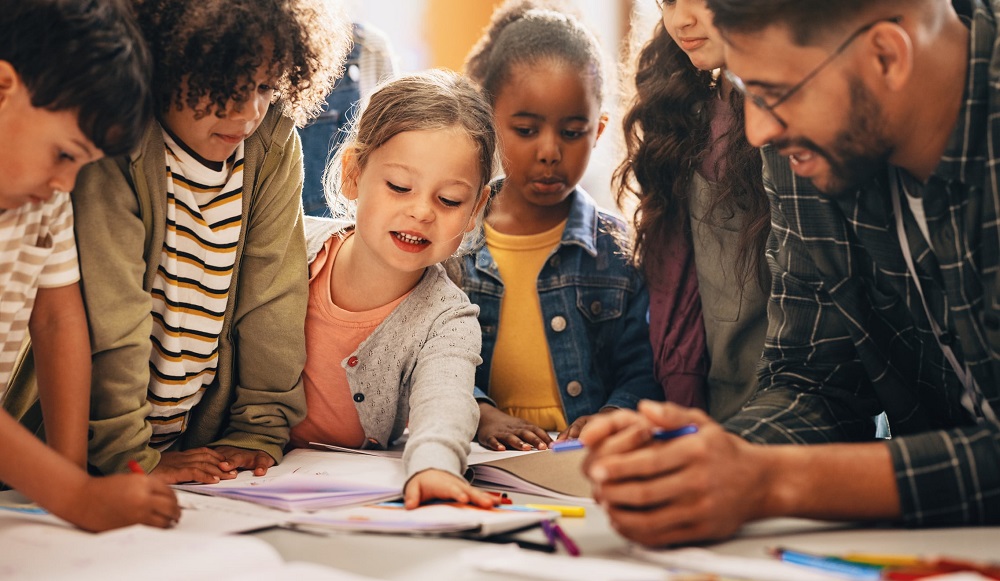
Traditional educational models have long relied on direct instruction, where a teacher delivers lectures from the front of the classroom while students absorb information individually. While this traditional structure has its place, modern educational research highlights the transformative power of interactive, student-centered methodologies. Central among these approach models is collaborative learning—an instructional strategy that structures learning around small groups working together to solve problems, complete tasks, or master complex academic concepts.
Collaborative learning transforms passive listeners into active participants. When students engage with their peers to analyze ideas, explain concepts, and negotiate solutions, they build a far deeper understanding of academic material than passive memorization allows. Beyond academic growth, working in structured groups equips students with social, emotional, and communication skills necessary for success in modern higher education and workplace environments.
The Cognitive Advantages of Working Together
Learning is inherently a social process. When students collaborate, they do not simply share the workload; they actively expand their cognitive capabilities through peer interaction, discussion, and collective problem-solving.
Deepening Conceptual Understanding
When a student explains a concept to a classmate, they engage in a process known as cognitive elaboration. To teach an idea to someone else, a student must reorganize the information internally, clarify their own reasoning, identify gaps in their logic, and select clear language to express it. This active processing strengthens memory retention and deepens conceptual understanding for both the peer giving the explanation and the peer receiving it.
Encouraging Diverse Perspectives and Critical Thinking
In an individual learning environment, a student evaluates problems using only their personal background knowledge and perspective. Collaborative learning introduces diverse viewpoints into the problem-solving process. Group members bring distinct experiences, background knowledge, and analytical styles to the table.
Exposing students to alternative approaches forces them to evaluate competing arguments, defend their own conclusions using evidence, and adjust their thinking when presented with valid counterpoints. This dynamic interaction cultivates higher-order critical thinking and intellectual flexibility.
Social and Emotional Development in Group Learning
Classrooms serve as primary socialization spaces where young people learn to navigate relationships, manage emotions, and build social confidence. Collaborative learning structures provide a natural laboratory for developing essential interpersonal competencies.
Building Communication and Active Listening Skills
Effective group work requires continuous, purposeful communication. Students must articulate their ideas clearly, ask clarifying questions, and practice active listening to ensure their peers feel heard. Over time, students learn how to speak persuasively, adapt their communication style for different listeners, and interpret non-verbal cues from group members.
Developing Conflict Resolution Capacities
Disagreements are a natural part of group dynamics. When students hold differing views on how to approach an assignment or divide tasks, they encounter authentic opportunities to resolve conflict. Under teacher guidance, collaborative learning teaches students how to express disagreement respectfully, compromise constructively, and focus on shared goals rather than personal differences.
Fostering Empathy and Classroom Inclusivity
Working closely with peers from diverse socio-economic, cultural, and academic backgrounds breaks down personal barriers and reduces social isolation. As students support one another in achieving common goals, they develop empathy and mutual respect. This inclusive environment strengthens the overall classroom culture, reducing bullying and creating a safer emotional space for academic risk-taking.
Preparing Students for the Modern Workforce
The modern global economy places a heavy premium on teamwork, cross-disciplinary collaboration, and adaptive problem-solving. Employers across sectors consistently highlight collaborative capability as a top skill required in new hires.
Bridging the Gap Between School and Career
In professional environments, projects are rarely executed in complete isolation. Modern workplaces rely on cross-functional teams where individuals combine specialized knowledge to solve complex challenges. Classroom group projects mirror these professional realities, preparing students for boardrooms, research labs, and project teams where success hinges on collective effort rather than isolated individual performance.
Cultivating Accountability and Shared Leadership
Collaborative learning structures teach personal accountability within a group context. When students know their peers rely on them to complete a portion of a project, they develop a sense of responsibility to the team. Furthermore, group work allows leadership to emerge naturally. Different students can take charge of specific roles based on their individual strengths—such as organizing timelines, facilitating discussion, or managing technical tools.
Key Strategies for Effective Implementation
Collaborative learning does not happen automatically simply by seating students near each other. Unstructured group work can lead to frustration, dominant personalities taking over, or disengaged group members. Educators must design and facilitate group activities intentionally to maximize their effectiveness.
Interdependence and Individual Accountability
Successful group activities depend on positive interdependence—the understanding that group members sink or swim together. Teachers can foster this by assigning specific roles to each participant, such as team leader, recorder, timekeeper, and presenter. At the same time, teachers must enforce individual accountability through individual quizzes, peer evaluations, or self-reflection logs to ensure every student contributes meaningfully.
Thoughtful Group Selection and Size
Group size and composition significantly influence group dynamics:
-
Optimal Group Size: Groups of three to four students generally yield the best results. Larger groups make it easier for quiet students to become disengaged and harder for the team to coordinate schedules and tasks.
-
Heterogeneous Grouping: Mixing students with varying academic skill levels, backgrounds, and learning strengths fosters a richer learning environment where students support and learn from one another.
Explicit Instruction in Collaboration Skills
Educators cannot assume students automatically know how to work in teams. Teachers must explicitly model collaboration expectations, provide sentence starters for respectful debate, and coach groups through friction points during the learning process.
Frequently Asked Questions
What is the primary difference between cooperative learning and collaborative learning?
Cooperative learning typically involves a teacher assigning specific, structured tasks with pre-defined roles where students work together to complete a specific goal. Collaborative learning is more open-ended and student-driven, where group members negotiate the process, divide responsibilities, and explore solutions together with greater autonomy.
How does collaborative learning benefit struggling or low-achieving students?
Struggling students benefit from peer explanations, which are often delivered in relatable language. Working in small groups reduces academic anxiety, providing a safer space to ask questions and try out ideas compared to speaking in front of the entire class.
How can teachers prevent one student from doing all the work in a group project?
Teachers can prevent uneven workloads by establishing clear individual accountability metrics, assigning distinct roles to each team member, requiring periodic progress check-ins, and incorporating peer evaluation rubrics into the final grade.
Is collaborative learning effective for introverted students?
Yes, when structured properly. Small group environments are often less intimidating for introverted students than whole-class discussions. Teachers can support introverts by incorporating individual reflection time before group discussions begin and assigning clear roles that match their strengths.
Can collaborative learning be implemented in online or remote learning environments?
Collaborative learning adapts effectively to digital classrooms using breakout rooms, shared document editing platforms, digital whiteboards, and asynchronous group discussion boards.
Does collaborative learning slow down the coverage of academic curriculum?
While collaborative activities may take more instructional time initially, they lead to higher retention rates and deeper conceptual understanding. Because students master concepts more thoroughly during collaborative sessions, teachers spend less time re-teaching material later in the term.
How should student performance be evaluated in collaborative learning assignments?
Evaluation should balance collective group success with individual mastery. A combination of a shared group product grade, an individual assessment demonstrating concept mastery, and a peer collaboration score provides a fair and comprehensive evaluation.